

Supported Australian Documents
The FrankieOne KYC v2 API supports the following Australian documents:Birth Certificates
Birth certificates are official documents issued by the government that record an individual’s birth. They include details such as the individual’s name, date of birth, place of birth, and parentage. When submitting a birth certificate for verification, ensure the document is clear, complete, and issued by an official authority. All required details, as specified below, must be included: Required Fields- Basic Information
- Certificate Details
- Provide all available fields, including optional ones
- Use names and dates exactly as shown on the certificate
- Pay attention to historical date formats and registration district spelling
- Note any differences between registered and current legal names
- Matching requirements may vary by state, territory, or certificate age. Supplying complete and accurate information maximizes verification success.
Centrelink Cards
Centrelink cards are official documents issued by the Australian government that provide access to social security and welfare benefits. These cards contain personal details such as the cardholder’s name, date of birth, and Customer Reference Number (CRN). Required Fields- Basic Information
- Card Details
Citizenship Certificates
Citizenship certificates are official documents issued by the Australian government that confirm an individual’s Australian citizenship. These certificates contain personal details such as the individual’s name, date of birth, and certificate (stock) number. Required Fields- Basic Information
- Certificate Details
Drivers Licenses
Australian driver licences are official documents issued by Australian state or territory governments, authorizing individuals to operate vehicles. Each licence contains personal details such as the holder’s name, date of birth, licence number, and card number. Requirements and formats may vary by jurisdiction.- Basic Information
- Licence Details
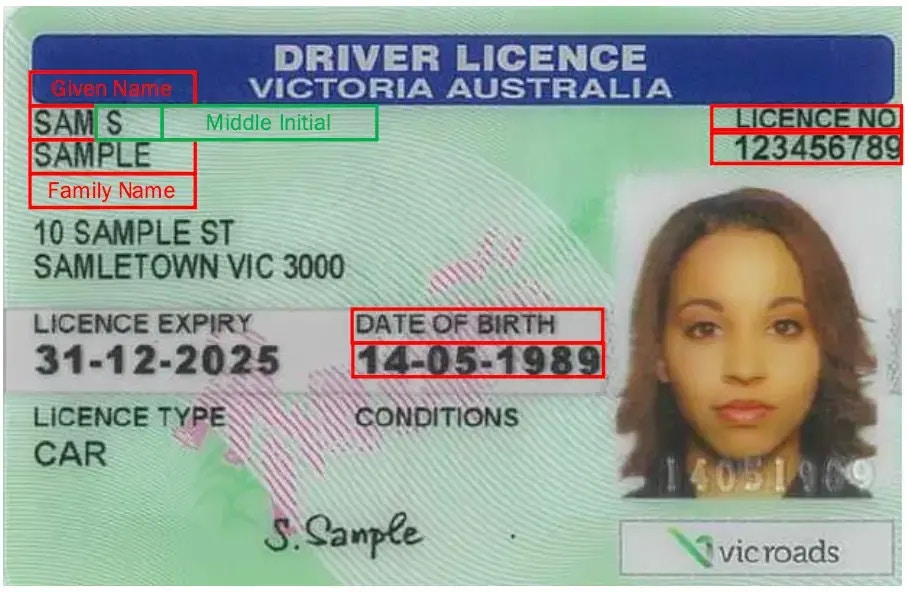
Licence Number Formats
Licence Number Formats
Card Number Formats
Card Number Formats
Australian Capital Territory (ACT)
Australian Capital Territory (ACT)
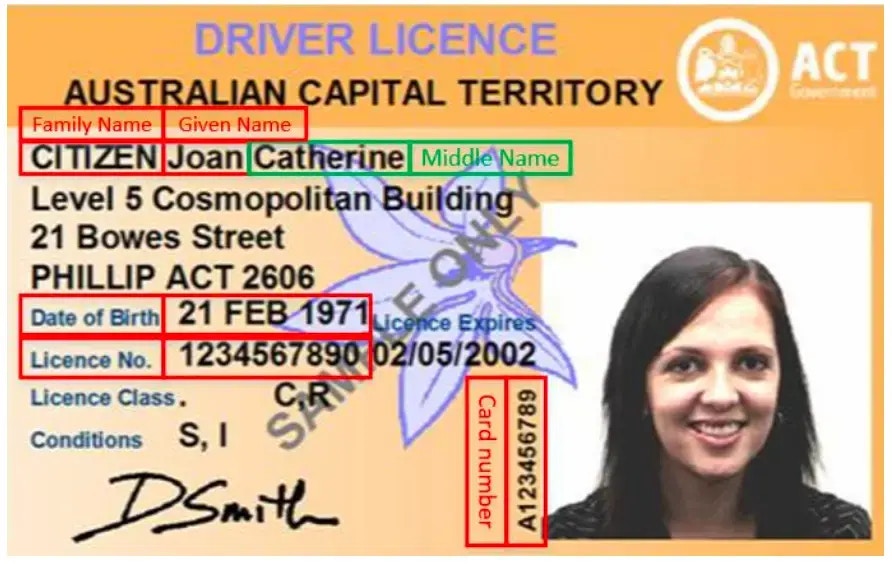
Australian Capital Territory Driver Licence sample - front
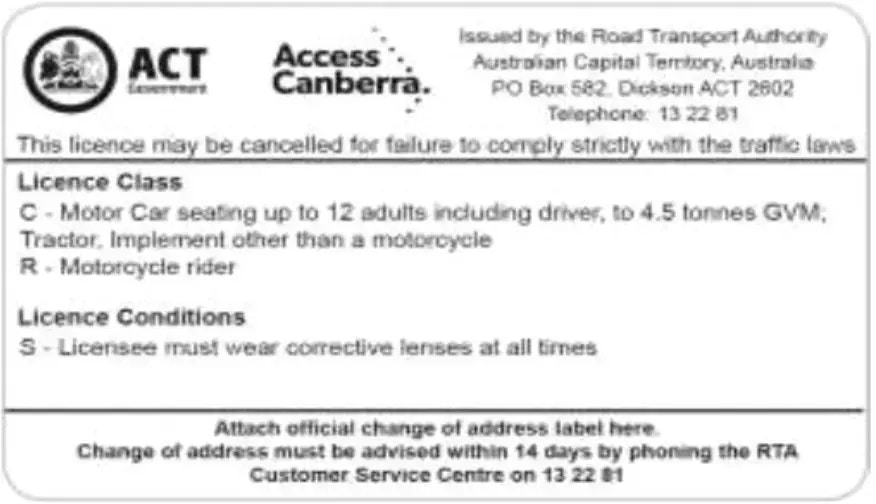
Australian Capital Territory Driver Licence sample - back
Northern Territory (NT)
Northern Territory (NT)
- Post Nov 2020
- Pre Nov 2020
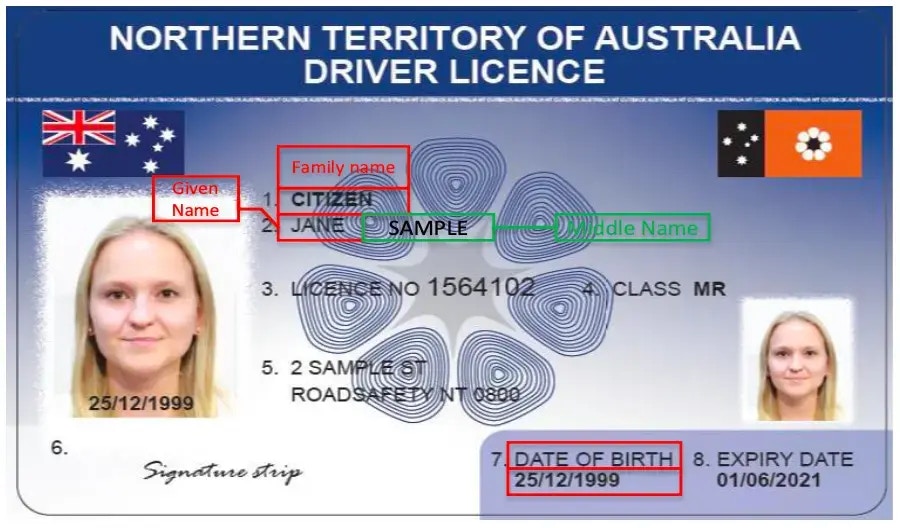
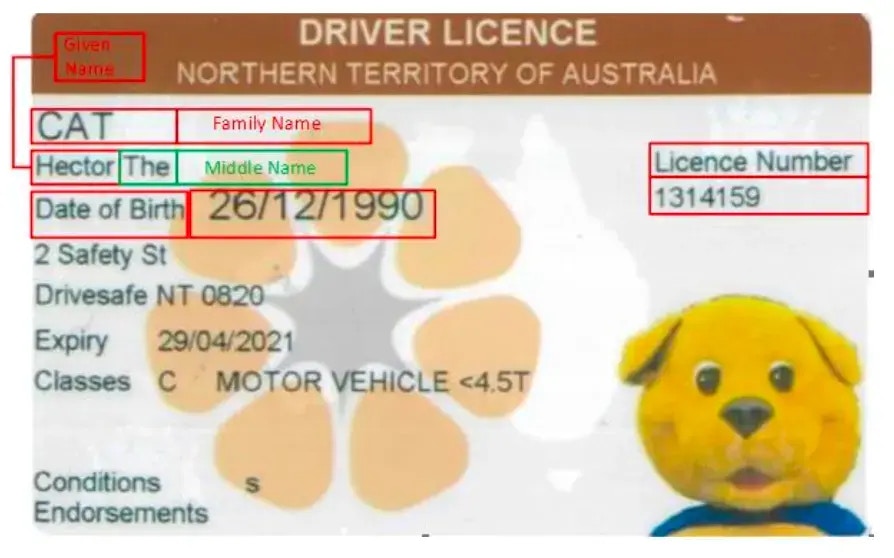
Northern Territory Driver Licence - post 1 November 2020 sample - front
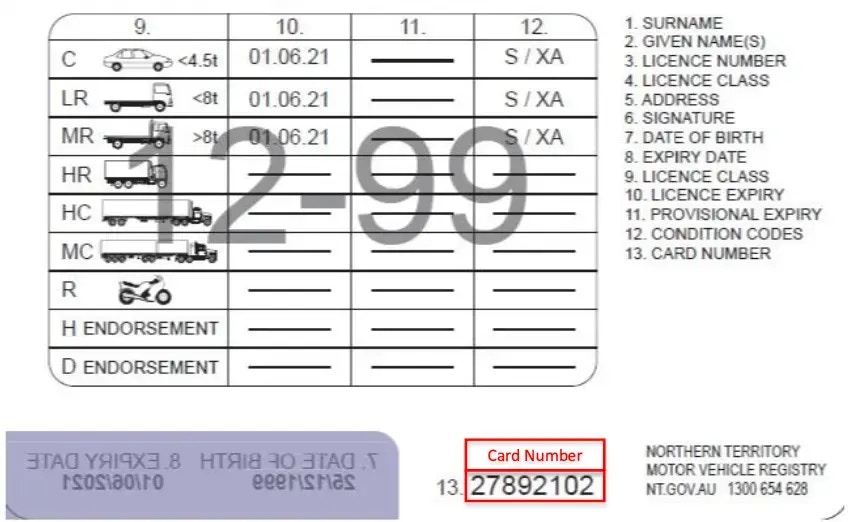
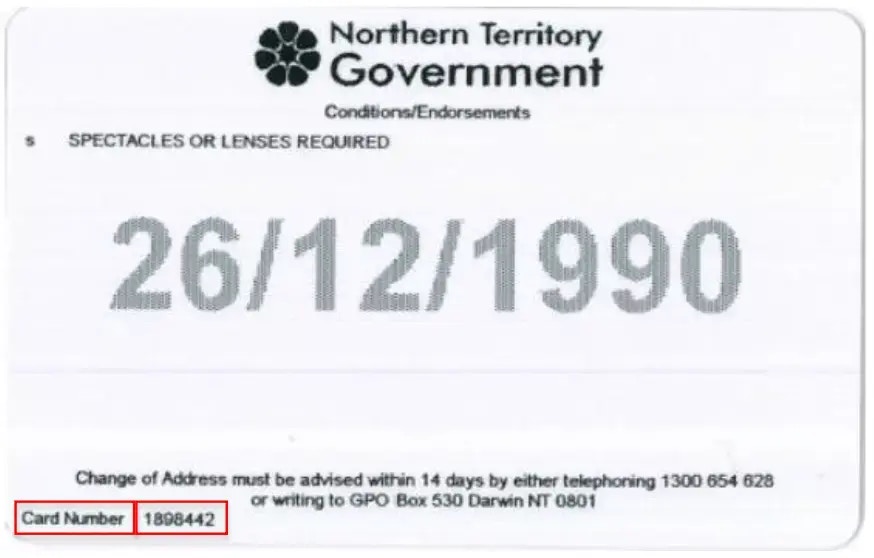
Northern Territory Driver Licence - post 1 November 2020 sample - back
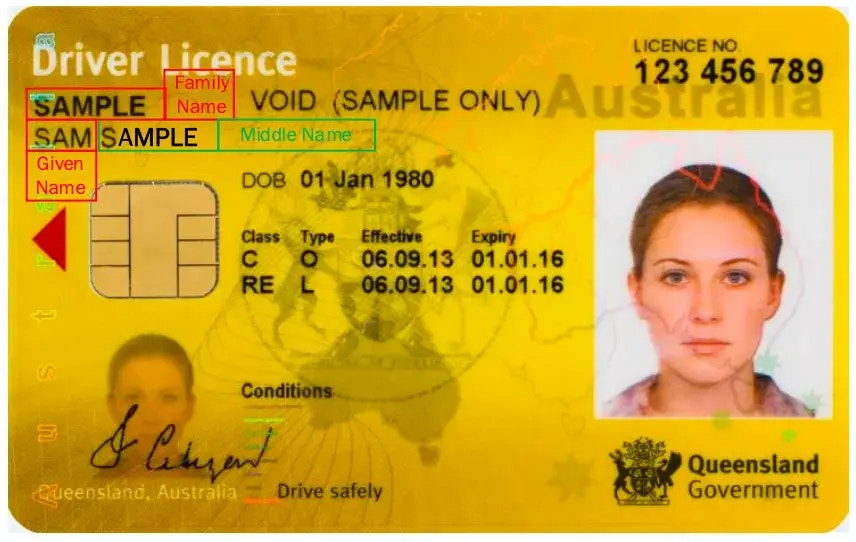
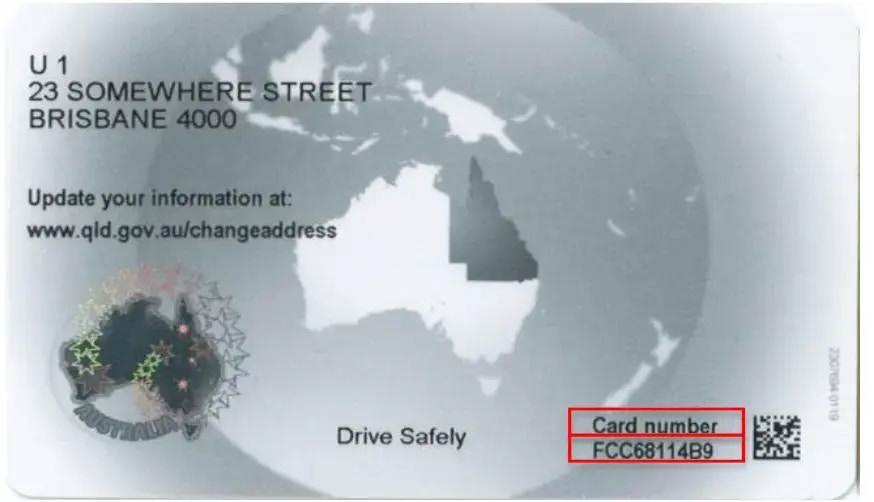
Queensland (QLD)
Queensland (QLD)
- Post June 2019
- Pre June 2019
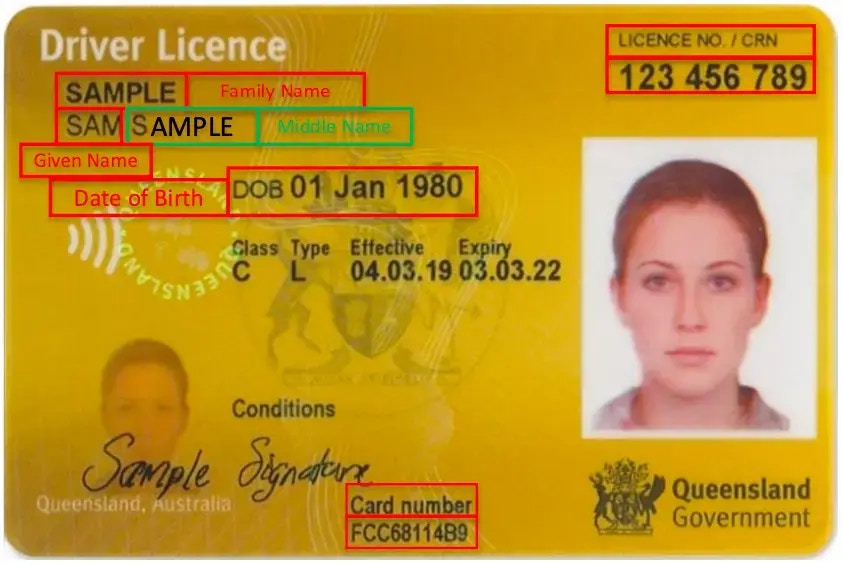
Queensland Driver Licence – post 12 June 2019 sample - front
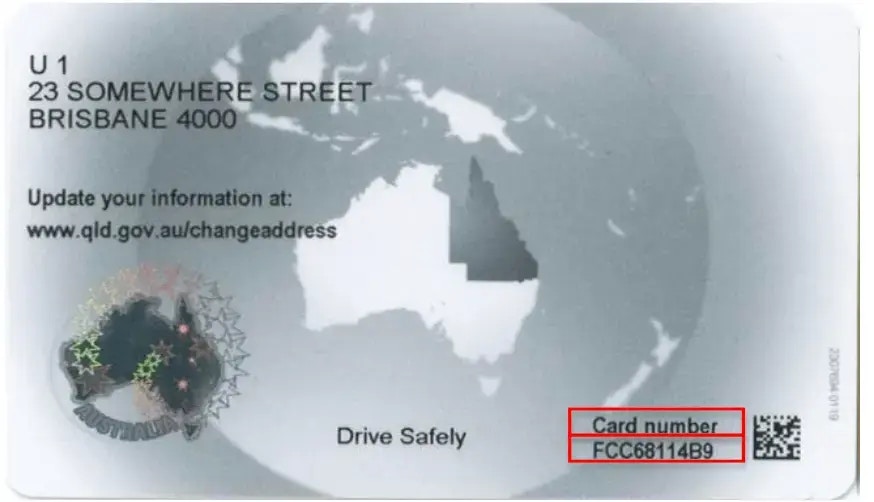
Queensland Driver Licence sample - back
New South Wales (NSW)
New South Wales (NSW)
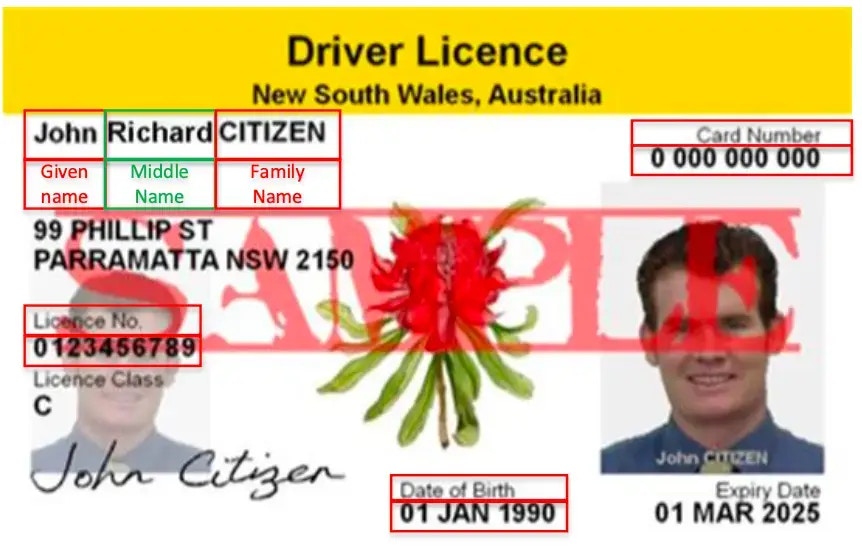
New South Wales Driver Licence sample - front
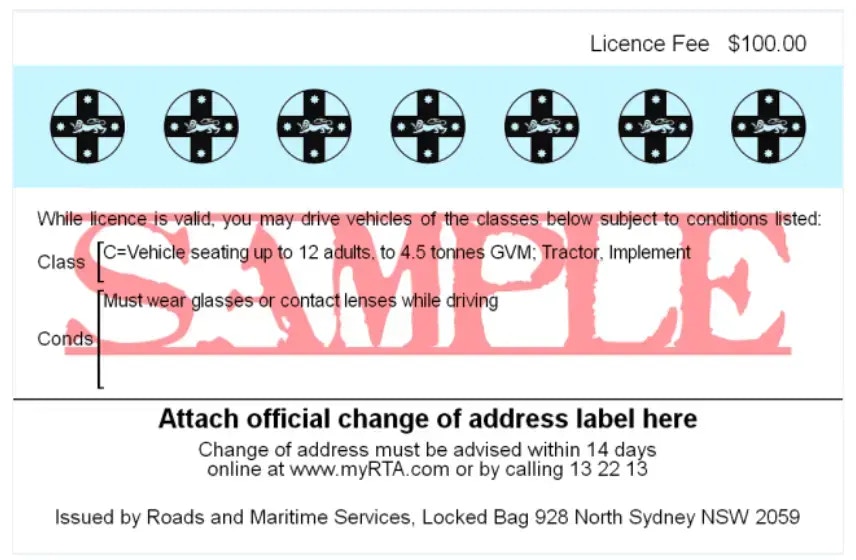
New South Wales Driver Licence sample - back
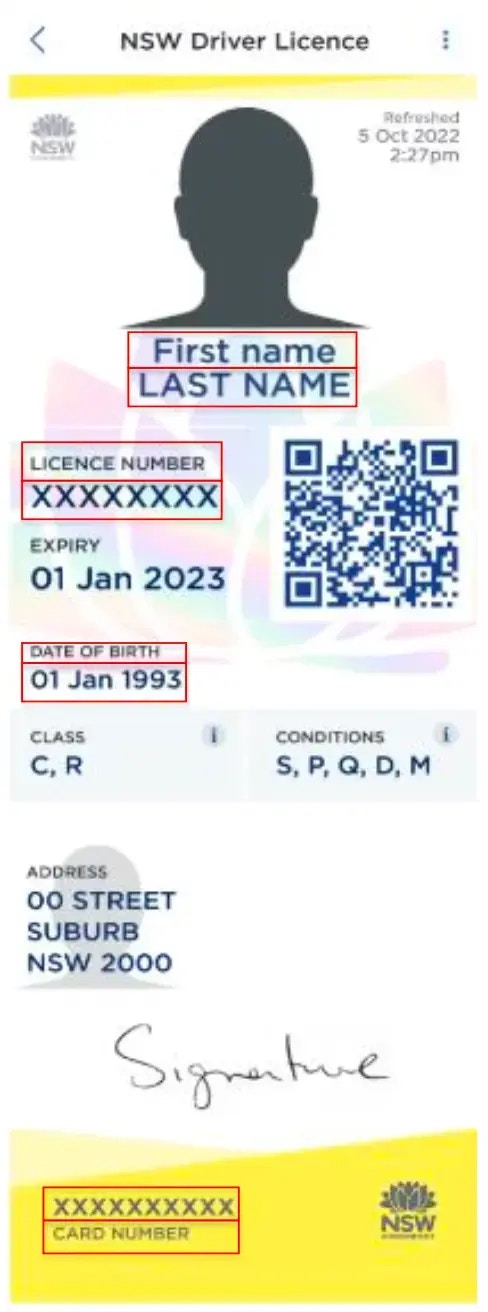
New South Wales Digital Driver Licence sample
South Australia (SA)
South Australia (SA)
- Physical License
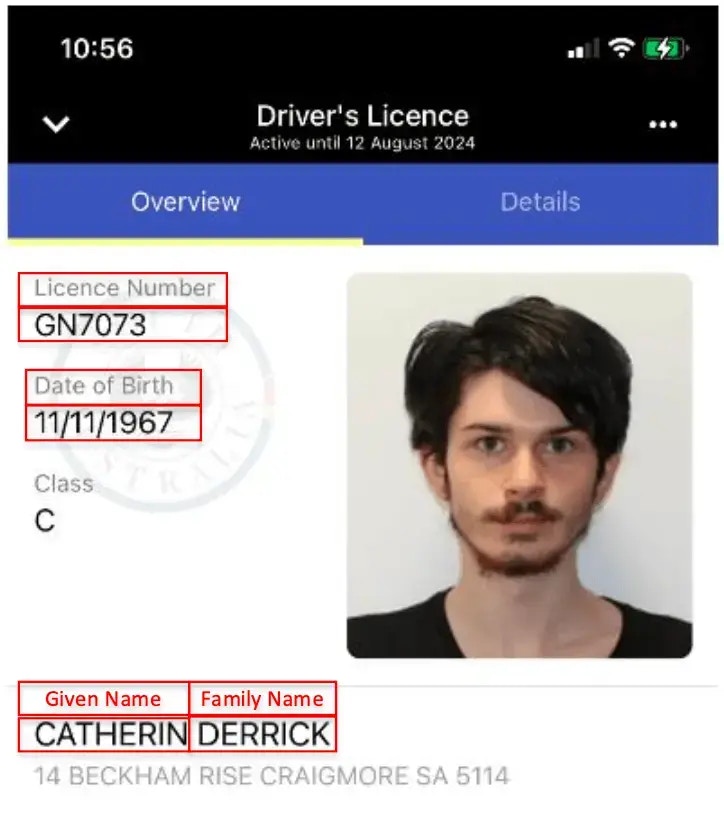
- Digital License
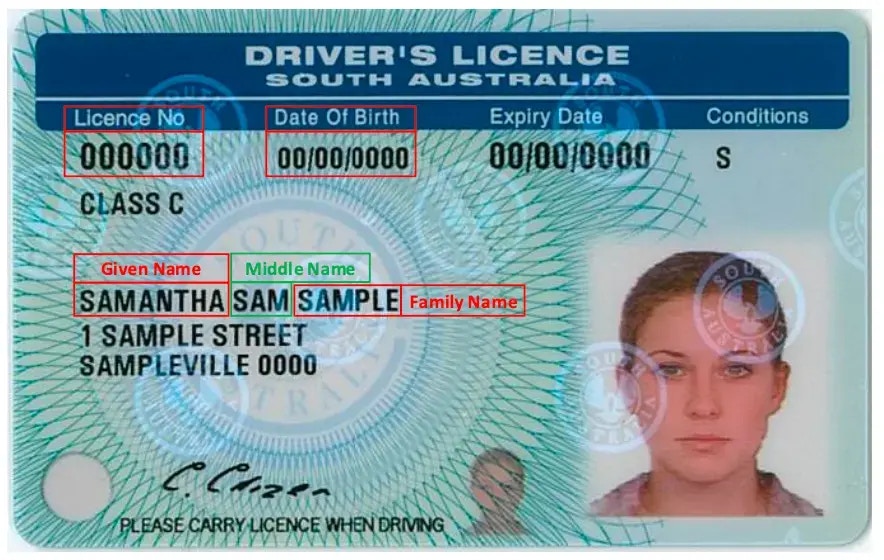
South Australia Driver Licence sample - front
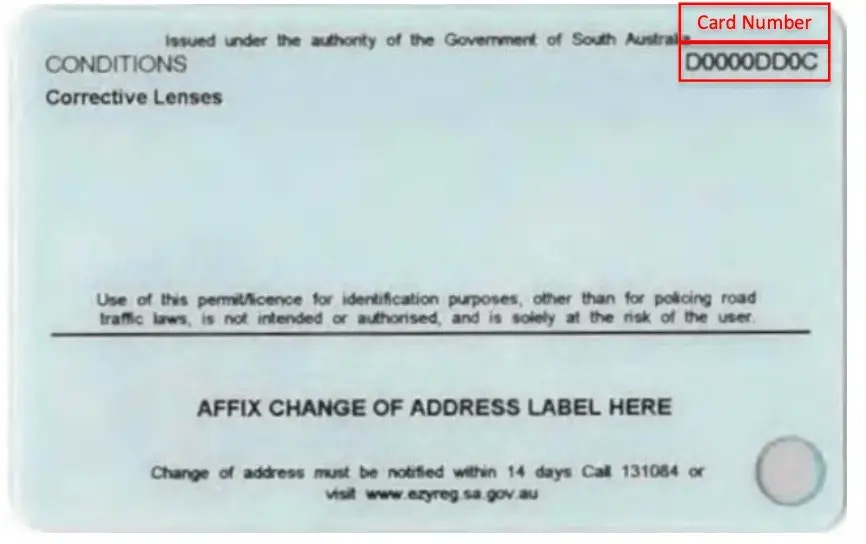
South Australia Driver Licence sample - back
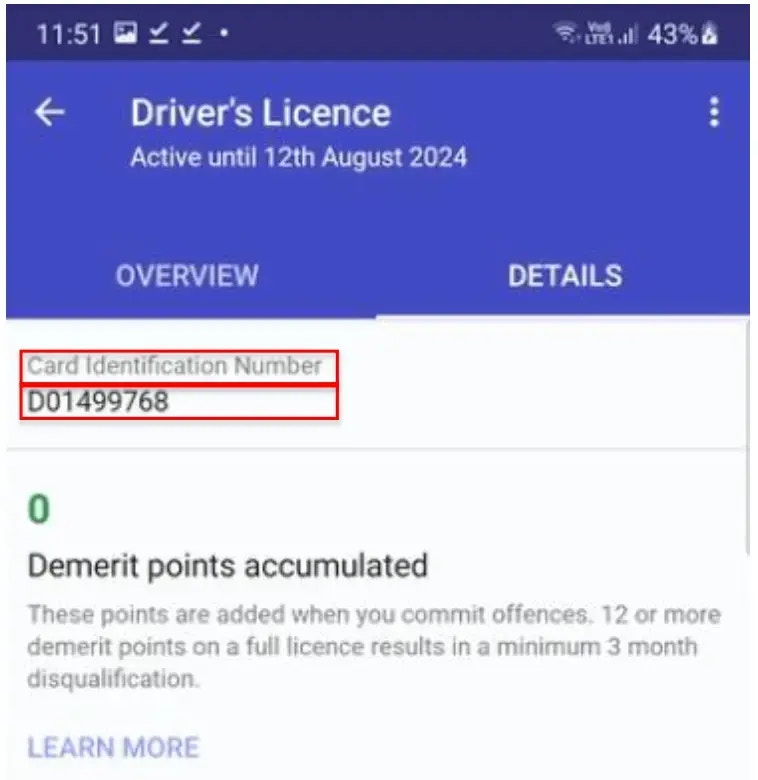
Tasmania (TAS)
Tasmania (TAS)
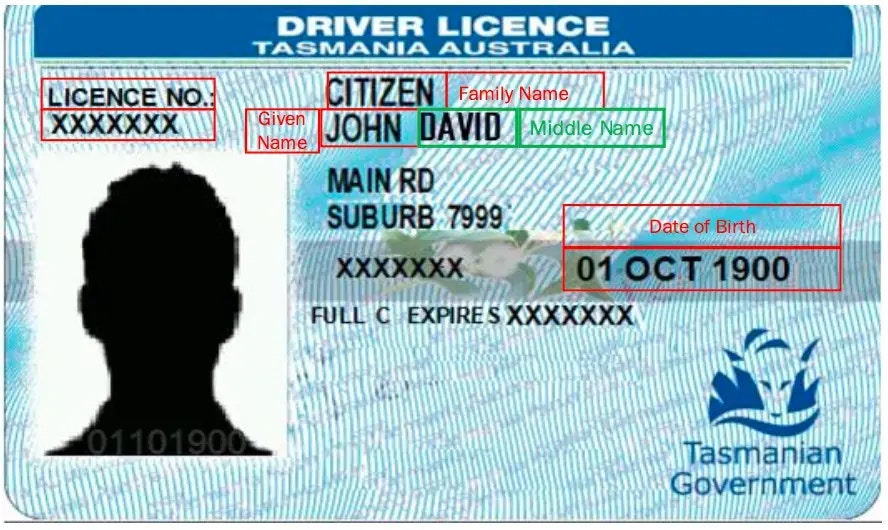
Tasmania Driver Licence sample - front
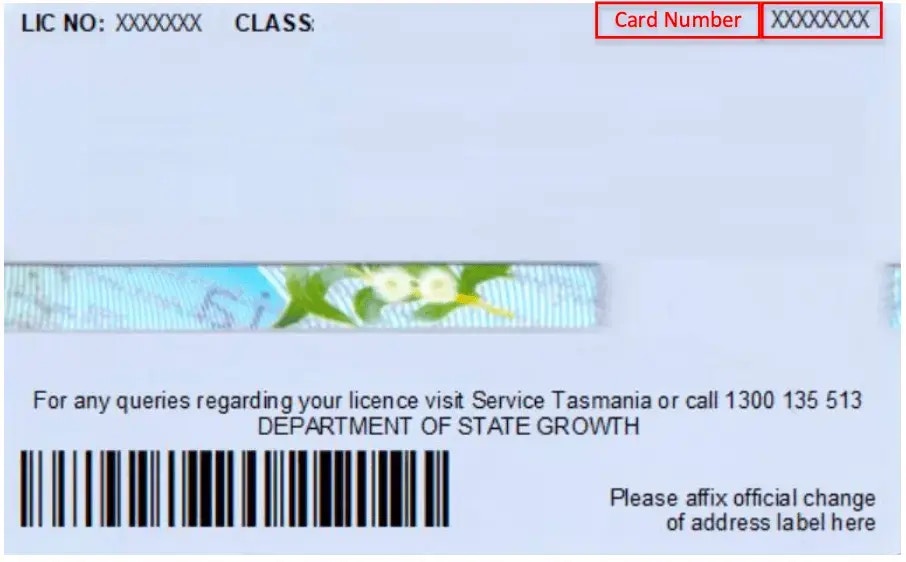
Tasmania Driver Licence sample - back
Victoria (VIC)
Victoria (VIC)
- Post Nov 2022
- Pre Nov 2022
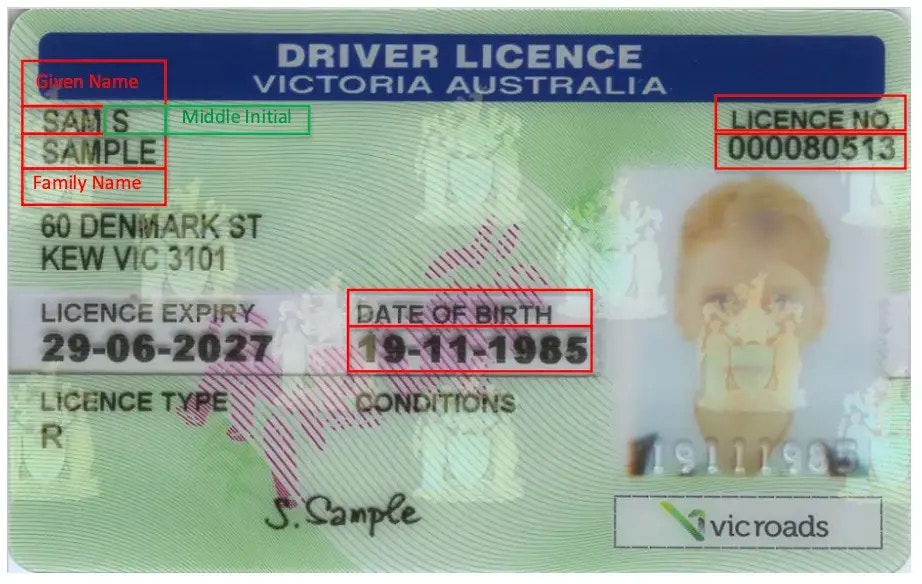
Victoria Driver Licence – post 7 November 2022 sample - front
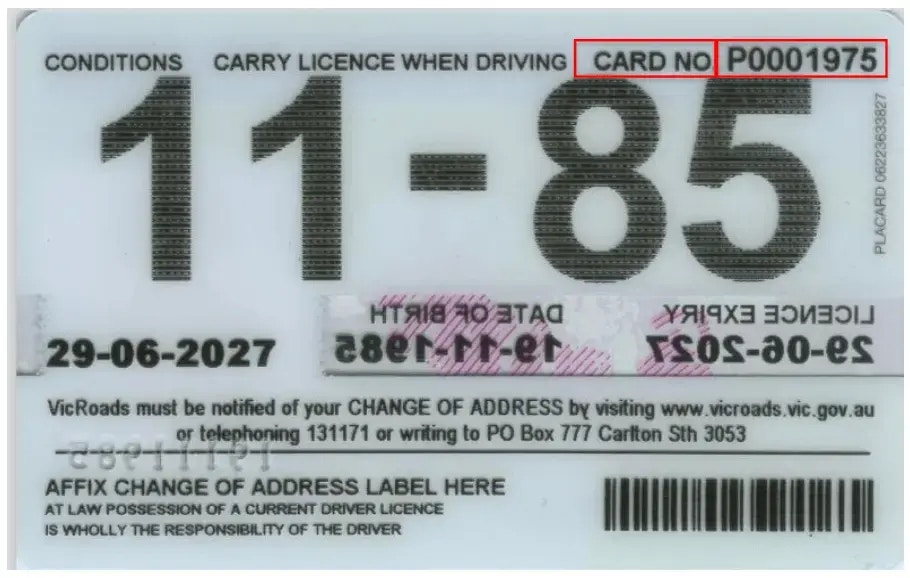
Victoria Driver Licence - post 7 November 2022 sample - back
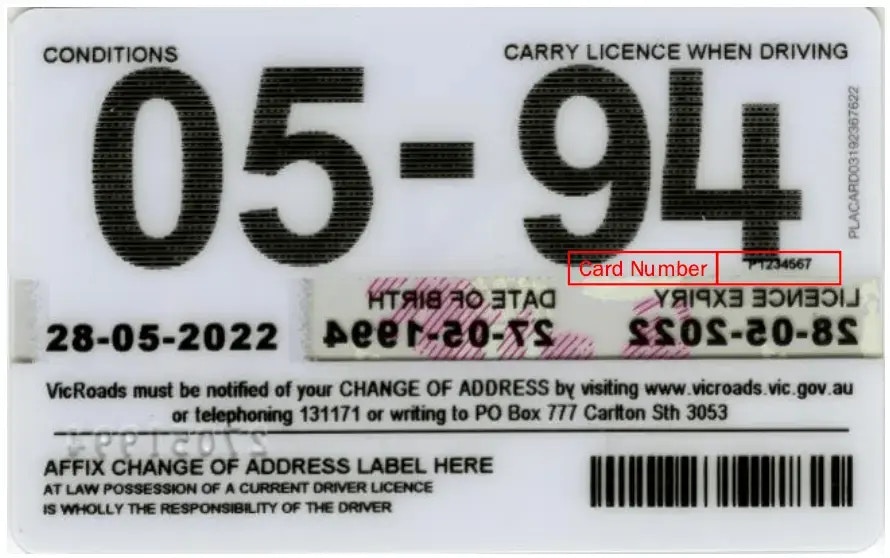
Western Australia (WA)
Western Australia (WA)
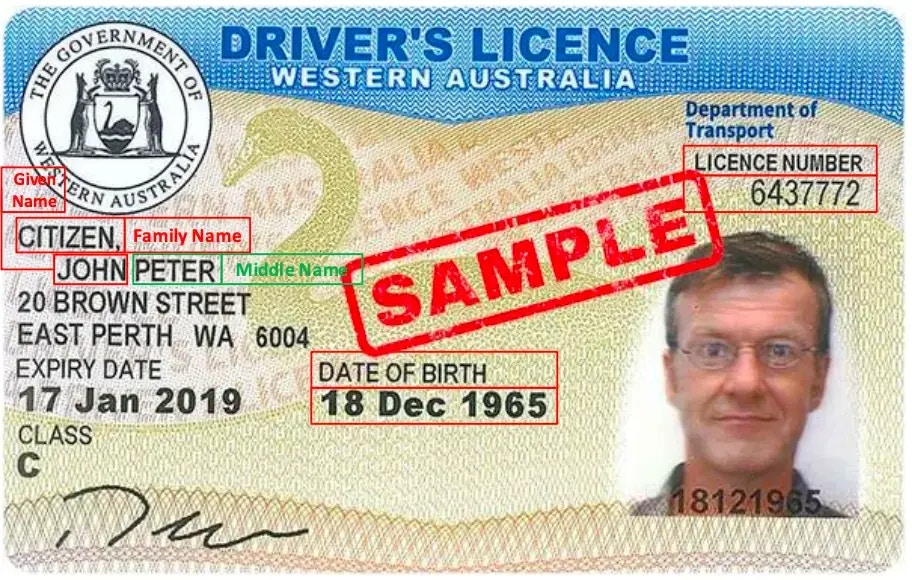
Western Australia Driver Licence sample - front
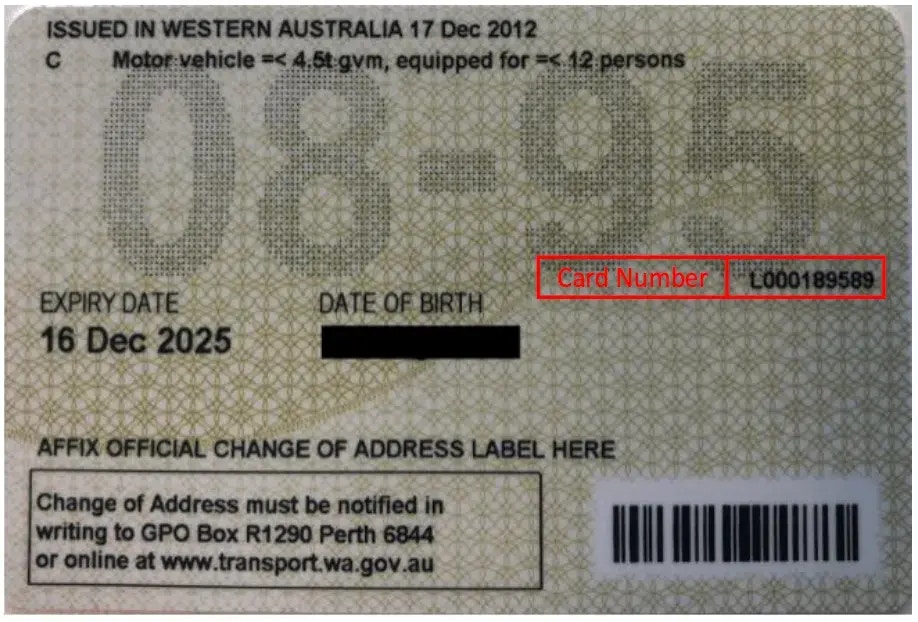
Western Australia Driver Licence sample - back
Victorian Licence Verification – Card Number Handling (Effective July 1, 2023)
Victorian driver licence card number verification is now subject to special rules:- For licences flagged as compromised (e.g., due to the Optus breach), the DVS will verify the current card number.
- For non-compromised licences, the card number is not checked and may match the licence number.
- Always collect and submit the card number, as verification requirements may change based on historical or future data breaches.
- If you are a direct DVS user, you may see an audit log entry: “Successful Match – Card Number hasn’t been checked.”
Immigration Cards (ImmiCard)
ImmiCards are official identity documents issued by the Australian Department of Home Affairs to eligible non-citizens, including visa holders, refugees, and humanitarian entrants. Each ImmiCard contains the holder’s name, date of birth, and a unique ImmiCard number. ImmiCards are used as evidence of identity and residency status in Australia. Required Fields- Basic Information
- Card Details
-) in the givenName field. Example: For “Cher”, use {"givenName": "-", "familyName": "Cher"}.Common Validation Issues
When submitting ImmiCard documents, ensure:- The ImmiCard number is exactly 9 characters: 3 uppercase letters (A–Z) followed by 6 digits (0–9), e.g.,
PRE123456. - Name fields must match the ImmiCard exactly, including case, spelling, and spacing. For individuals with a single name, use a hyphen (
-) for the given name (e.g.,{"givenName": "-", "familyName": "Cher"}). - The date of birth must be in
YYYY-MM-DDformat. - Include all names as shown on the card.
- Double-check all values for accuracy to avoid verification failures.
Marriage Certificate
Marriage certificates are official documents that record the marriage of two individuals. They include personal details such as the names of the individuals, date of marriage, and the issuing authority.Best Practices for Marriage Certificate Verification
- Confirm the certificate format before mapping fields.
- Use correct ISO date formats for all date fields.
- Follow state-specific requirements, especially for Victoria.
- Provide all available optional fields for higher verification accuracy.
- Ensure names match the certificate exactly, including spelling and order.
- Basic Information
- Certificate Details
Victoria (VIC) State-Specific Requirements
For marriage certificate verification in Victoria:- Enter the details from the left-hand column or first row as Name 2, regardless of the order on the certificate.
- Always refer to the latest DVS specifications for Victoria and other states to ensure correct field mapping.
Marriage Certificate Formats
Australian marriage certificates may use different participant labels depending on the certificate version:- Traditional: Bride/Groom
- Modern: Partner 1/Partner 2 Use the format that matches the certificate you are processing.
Name Change Certificates
Name change certificates are official documents issued by Australian state or territory authorities to record an individual’s legal change of name. These certificates include details such as the person’s previous name(s), new name(s), date of registration, and the issuing authority. Name change certificates are required for official identity verification when an individual has changed their legal name. Required Fields- Basic Information
- Certificate Details
National Health ID (Medicare)
National Health ID cards, commonly known as Medicare cards, are issued by the Australian government to provide access to healthcare services. They include personal details such as the individual’s name, date of birth, and Medicare number. Required Fields- Basic Information
- Card Details
Australian Passports
Australian passports are official travel documents issued by the Australian government that certify an individual’s identity and citizenship. Each passport contains key personal information, including the holder’s full name, date of birth, passport number, nationality, and expiration date. When submitting an Australian passport for verification, ensure that all details are entered exactly as they appear on the passport. This includes correct spelling, capitalization, special characters, and the precise order of names. Accurate data entry is critical for successful verification.Passport Verification
Visa Verification
Key Passport Verification Guidelines
Exact Name Matching- Enter names exactly as shown on the passport, including capitalization, special characters, spaces, and diacritics.
- For Australian passports, use
AUS. - For visas, use the ISO 3166-1 alpha-3 code of the passport’s issuing country.
- Always provide the passport number, even for visa verification.
- Ensure the passport number matches the one associated with the visa.
- Incorrect or expired passport numbers will cause verification to fail.
- For visa holders, follow the name order and format as printed on the passport, regardless of local conventions.
- Basic Information
- Passport Details
Passport Number Formats
Passport Number Formats
- 8 characters: 1 letter followed by 7 numbers.
- 9 characters: 2 letters followed by 7 numbers.